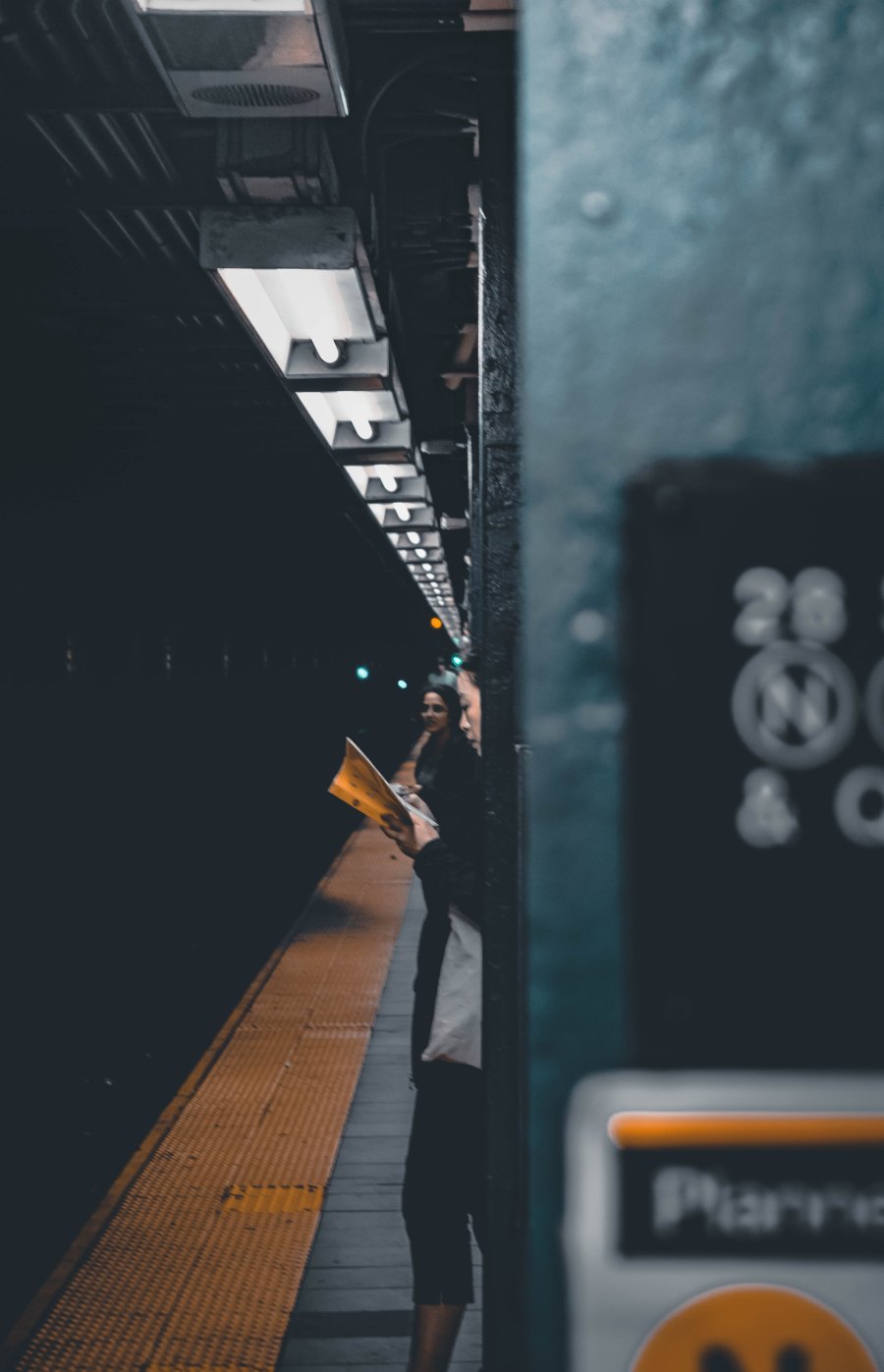
He cradled him to the floor of the subway.
A man fainted while riding a crowded F train to Brooklyn during evening rush hour on a Friday. There wasn’t much commotion, but I saw the man’s legs give out and another man gently lie him down so as to avoid greater injury.
The fainted man quickly came-to, though it became clear that he didn’t know the man who had helped him.
How do we reconcile the well-documented phenomenon that “New Yorkers are rude” with this most compassionate display of care for a total stranger? The New York Times investigated the source of the stereotype and found that it dates back to the 1600s when the governor sought to limit the “sinister, obscure and dubious words” of private complaints. The Village Voice’s [obnoxious] piece, “55 of the Rudest Things Rude New Yorkers Do,” has also explored – and exploited – this perception.
After living in New York for five years, I’ve certainly hardened. I’ve become hardened to the noise, the smells, the congestion, the exhaustion of grocery shopping in five different places, the laundry machine that jams with my eight quarters after I’ve already loaded it with soap. I’ve become hardened to things and to slow walkers and to long lines.
Becoming hardened happens to a lot of us, but my friends and I irk at it because it often translates into short tempers, which is not the way we want to move through our worlds. But, when inundated with so much – transit, jobs, transit, obligations, chores, expenses, transit, etc. – it’s difficult not to put your head down and just plow through.
John Sklyar alludes to the idea that it’s not that New Yorkers are rude, but instead it’s that we’ve adapted to our city and established a culture that enables us to endure the tumult in ways that merely appear rude. There is no doubt that it’s rude when you receive a grunt after saying “sorry” for stepping on someone’s foot on a crowded train. But, the general fast-paced-get-out-of-my-way attitude is often less about others and anything they’ve done and more about the demands we all face every day.
Another attempt to dispel the New Yorkers-are-rude phenomenon is Joan Acocella’s piece in the Smithsonian where she argues that it’s really just that New Yorkers are more “familiar” (often striking up conversation with someone who shares the same purse) and because we tend live more of our lives “in public” (taking public transit everywhere and eating lunches in parks). She believes that New Yorkers have less of a separation between their public and private lives and therefore are more likely to tell you what they really think or correct your mistake or speak up if they dislike your parenting style.
While I disagree that New Yorkers feel more familiar – something I would attribute as a characteristic of Southern culture – I do agree with her observation that when a passerby asks someone near you for directions, you’ll likely try to hover and offer your own insight. I do that all the time. Last night, tourists stopped my boyfriend and me in Union Square and asked us where was Gramercy Tavern. I couldn’t remember if it was on 20th or 21st, and despite being tired and just wanting to get home, I insisted on whipping out my phone to look it up. Acocella’s take is that we hover because we want to show that we’re experts, but I like to hope that the desire to help is stronger than our inclination to simply show that we know things.
Part of hygge includes fostering community – we are better off when others around us are and advancing inclusion, support and safety is inherent in hygge.
It seems many New Yorkers recall their humanity in situations where others need help – whether helping a fainting man on the F train or assisting tourists find some dinner. A feeling of camaraderie instantly resurfaces. We remember that we’re all “in this together.” Accocella writes that the “special difficulties of life in New York – small apartments, the struggle for a seat on the bus or a table at a restaurant – seem to breed a sense of common cause.”
For me, and I suspect for others, too, this feeling is – at its root – a bit selfish. It’s the feeling “that could be me” and hoping that others would help. I could faint on a Friday after a long, stressful day, and often feel that I just might.
Outside of market exchanges, I am more likely to have a compassionate exchange with someone when something is wrong – when I’ve dropped a glove or we’re commiserating over the late train – than when things have gone well. But, we have it in us! We are and want to be nice people! We do it with our friends and coworkers!
Skylar says that we’ve become this way because we’ve adapted, but adaptation is linked to progress. We’ve adapted to a head-down-plow-through mentality because it helps us get through the tumult. But, we know the tumult is there. We expect it. Now, let’s advance and adapt to the tumult and share our compassion outside of moments where others lose consciousness.
Photo by: Mauricio Chavez
 Mad About Hygge