“Will having a newborn distract from the time we have together?…Don’t you think saying goodbye to your child will make your death more painful?” Lucy asked.
“Wouldn’t it be great if it did?” Paul said.
What? I did a triple-take. He wants it to be more painful? Who would want their death to be more painful? It took me several tries to understand that Paul was willing to endure that pain for the greater happiness he would come to know.
I had to put the book down and feel that.
His response isn’t surprising, though; Paul was driven to understand what makes life meaningful. At 36, he was diagnosed with stage four lung cancer and was forced to think again about what gave him meaning.
As a kid and student, Paul sought answers through his relationships, literature by T.S. Elliot and Nietzsche, and the study of the natural origin of meaning – the brain. He appreciated literature’s richness in accounting for the “life of the mind” and neuroscience’s ability to identify the “most elegant rules of the brain.” Paul wasn’t sure about which career path was right for him, having considered writing and academia, but ultimately had an epiphany and decided to marry his affinities for “biology, mortality, literature and philosophy” in what he describes as a calling to practice medicine and guide others in their understandings of life and death.
Paul was a good doctor not because he had learned all the right things and honed his skills, but because he had assumed responsibility for the fate of his patients and could admit when he was wrong. He knew he wasn’t perfect and didn’t have all the answers and that the only way to be fair was to include his patients and their loved ones in the choices they had and guide them as they made decisions.
When Paul received his diagnosis, he tried to come to terms with the the fact that he had spent the majority of his life preparing for a life he likely wouldn’t get to experience. All the sacrifices of time with family and friends, writing, sleep. Just when he and Lucy were ready to “start” living, he was forced to reinterpret his purpose.
When you don’t know how much time you have, it’s hard to plan. Should he keep practicing medicine? Finish his fellowship? Graduate? Should he start a family? Write? Paul had a lot of questions and not a lot of answers. He spent time thinking about what was most important to him. In the end, he did all of it.
The thing is, none of us knows how long we have. I don’t mean to minimize Paul’s experience or his pain and suffering – I mean to learn from it. Paul’s story reminds us that we are finite. Our time is brief.
Paul established a different relationship with time which stood out to me – he said (not in a loving way) that time ceased to be a unit of measurement, and instead became a state of being. What does that mean? What does that look like?
Flow is a psychological phenomenon in which one becomes so immersed in an activity that he ceases to be conscious of time and enters a blissful state. For example, a painter may enter flow and paint for eight hours and only feel like she was busy for two. Perhaps in moments like this, time becomes a state of being where we cease to be aware of time in its limits and instead only as the construct that allows us to paint or run or write or read or walk or be.
I said to my friend the other day who was going to be late to meet me for drinks not to worry, that I would just “kill some time and walk around” since it was nice out. I immediately regretted my choice of words, but not the intent. Since I read Eckert Tolle’s book, The Power of Now, several years ago, I’ve tried to practice viewing time and “open” or “free” time not as something to overcome or endure, but as something to fill with purpose and for which to be grateful. To fill that time with learning about myself, my city, my new and budding interests, and hopefully, to do so while forgetting that I’m doing it.
The goal is not, I don’t think, about conquering time, but what if we became so aware of it as if to greet it as a friend instead of an enemy – to say, “Hi there, I see you, but I, not you, decide your role.”
Living while worrying about how much time we have left is a fool’s errand. Paul’s story reminds us that doing work that fills your soul is crucial to the human experience – find what you love and do it. His story also reminds us, though, that we should pay attention to the other pieces of ourselves that need filling – our day jobs, while often fulfilling in many ways, may not cut it entirely. Find a way to feed the other parts of you.
And sometimes, pain is a worthwhile cost to enjoy the benefits of supreme happiness. I hope to appreciate the in between, the unknown, and even the painful as part of a greater journey.
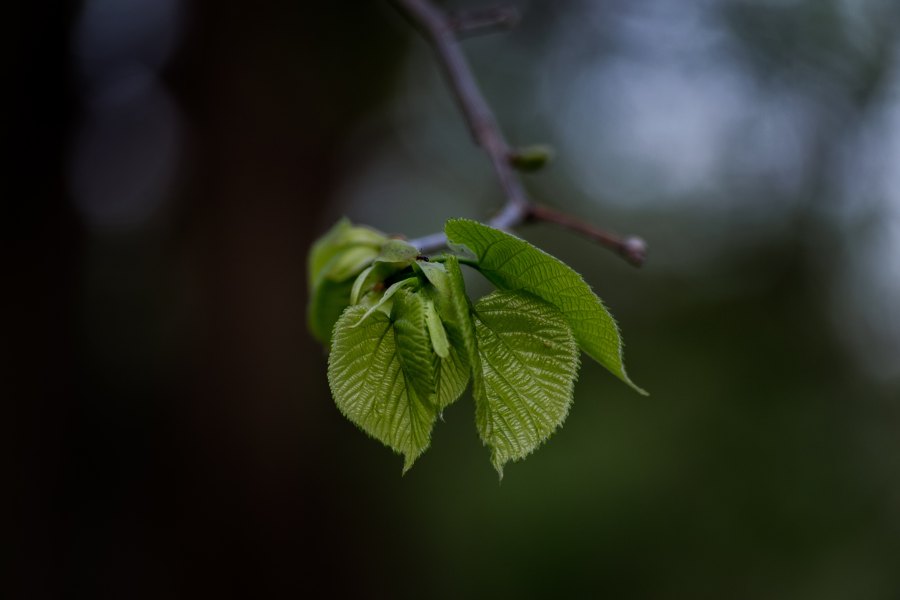
photo by: Ryan
Ω
_____________________________________________________________________________________


 Mad About Hygge
Pingback: Never too old to learn new tricks – or change course – Mad About Hygge